Newsletter Subscribe
Enter your email address below and subscribe to our newsletter
Enter your email address below and subscribe to our newsletter


Elevate Your Space, Everyday.
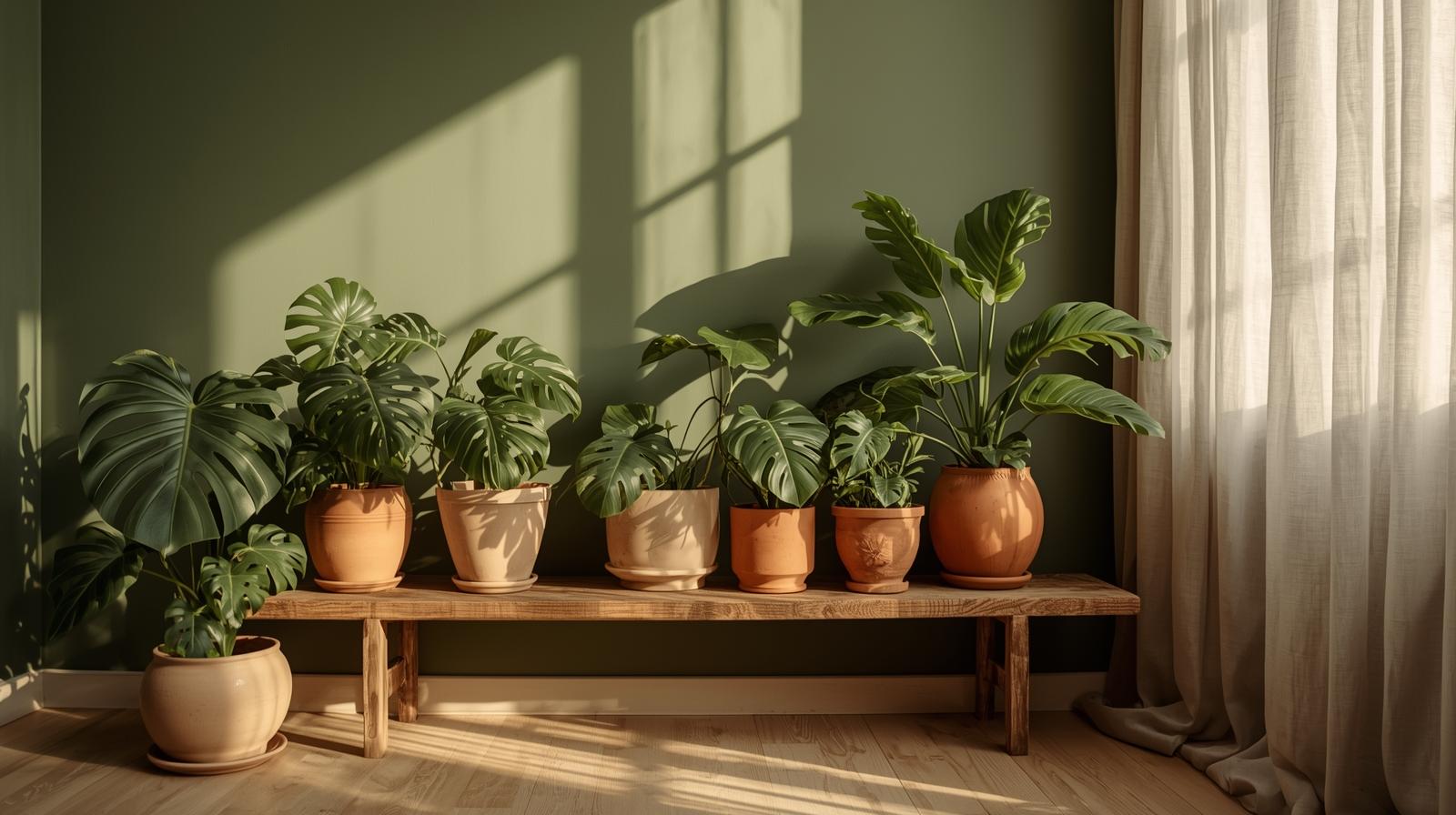
No sun? No problem. Discover the best indoor plants for low light apartments that thrive in darker corners.
In cramped city apartments where daylight filters through glass like diluted gold, the right plant isn’t just decoration—it’s quiet resistance against sterility. These aren’t specimens demanding spotlight; they thrive in shadow, purify stale air, and anchor us to something alive without cluttering a single square inch. For those seeking calm in concrete confines, low light isn’t a limitation—it’s an invitation to curate with intention.
“Low light” gets misread. It doesn’t mean absence. It means gentleness. Think of it as daylight after it’s passed through linen curtains—softened, scattered, slowed. This is the light that falls evenly across a page you’re reading, that grazes the curve of a ceramic mug without casting sharp edges. In this muted glow, certain plants don’t just survive. They settle in. They exhale. They become part of the room’s rhythm rather than its decoration.
Clutter thrives in distraction. But shadow-loving greenery asks for stillness. It refuses to shout. Which is precisely why your choices matter more here than in sun-drenched lofts. One poorly placed fern can feel like visual noise. One well-chosen ZZ plant? It becomes architecture.
We aren’t wired for sealed environments. Concrete, drywall, central heating—these insulate us from weather, yes, but also from the subtle shifts that remind us we’re part of something larger. A plant in low light doesn’t mimic a forest. It whispers one. Its slow unfurling, the occasional dew on a leaf in a steamy bathroom, the way it leans—not toward a blazing sun, but toward the pale suggestion of sky—these are micro-connections. They ground without overwhelming. (You don’t need a jungle. You need a companion.) For a deeper look at how this quiet integration supports mental clarity and physical well-being, see our guide to biophilic design.
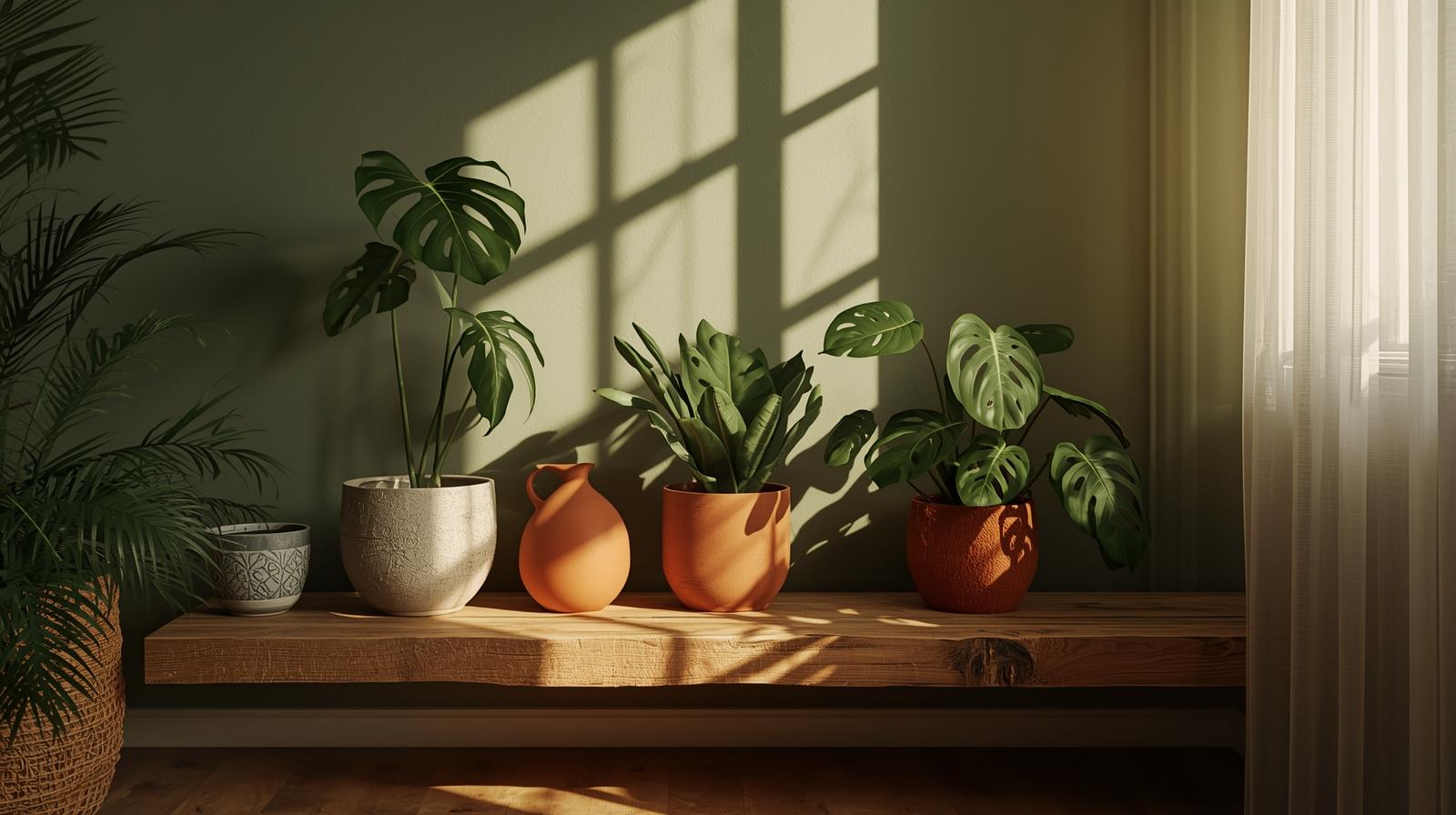
Glossy, geometric leaves rising from thick, water-storing rhizomes. The ZZ plant looks like it was carved, not grown. It tolerates neglect the way a good coat tolerates rain—quietly, without complaint. Water it once a month. Forget it for six weeks. It won’t wilt theatrically. It simply waits. And in that waiting, it adds structure to empty corners. Choose a matte-glazed pot in charcoal or oat. Let the plant be the only thing in the frame.
Upright. Unfussy. Almost architectural. Snake plants grow with the discipline of a well-edited paragraph—no wasted words, no sprawl. Their stiff, sword-like leaves pull double duty: they scrub toxins from the air (NASA confirmed this, though I prefer to think of it as quiet housekeeping) and draw the eye upward, making ceilings feel higher. Place one beside a reading chair. Or flank a doorway. But never crowd it. This plant needs breathing room to do its work.
Not all trailing plants are chaotic. Pothos, when given a single anchor—a hook above a bookshelf, the edge of a high cabinet—grows with deliberate grace. Its heart-shaped leaves cascade like slow water. It thrives in the kind of light that barely registers on a photographer’s meter. And it forgives overwatering better than most (though don’t test it). Keep it in a simple ceramic pot. No macramé hangers. Those belong to another decade—and another aesthetic.
When it blooms—a slender white spathe rising like a folded flag—it feels like a private celebration. Peace lilies prefer humidity, making them ideal for bathrooms with a sliver of natural light. Their broad, dark leaves absorb airborne pollutants with quiet efficiency. They’ll even tell you when thirsty: the whole plant droops, dramatically but recoverably. A gentle reminder, not a crisis. Place it on a stone ledge or a teak stool. Let it be the only object in the space.
Victorians kept these in dim parlors. Your great-grandmother might have had one by the piano. It endures. Thick, leathery leaves arch outward with dignified restraint. It doesn’t flower indoors. It doesn’t trail. It simply is—a steady presence in dim hallways or beside a bed where morning light never reaches. This is the plant for those who value reliability over spectacle. (And let’s be honest: spectacle is overrated.)
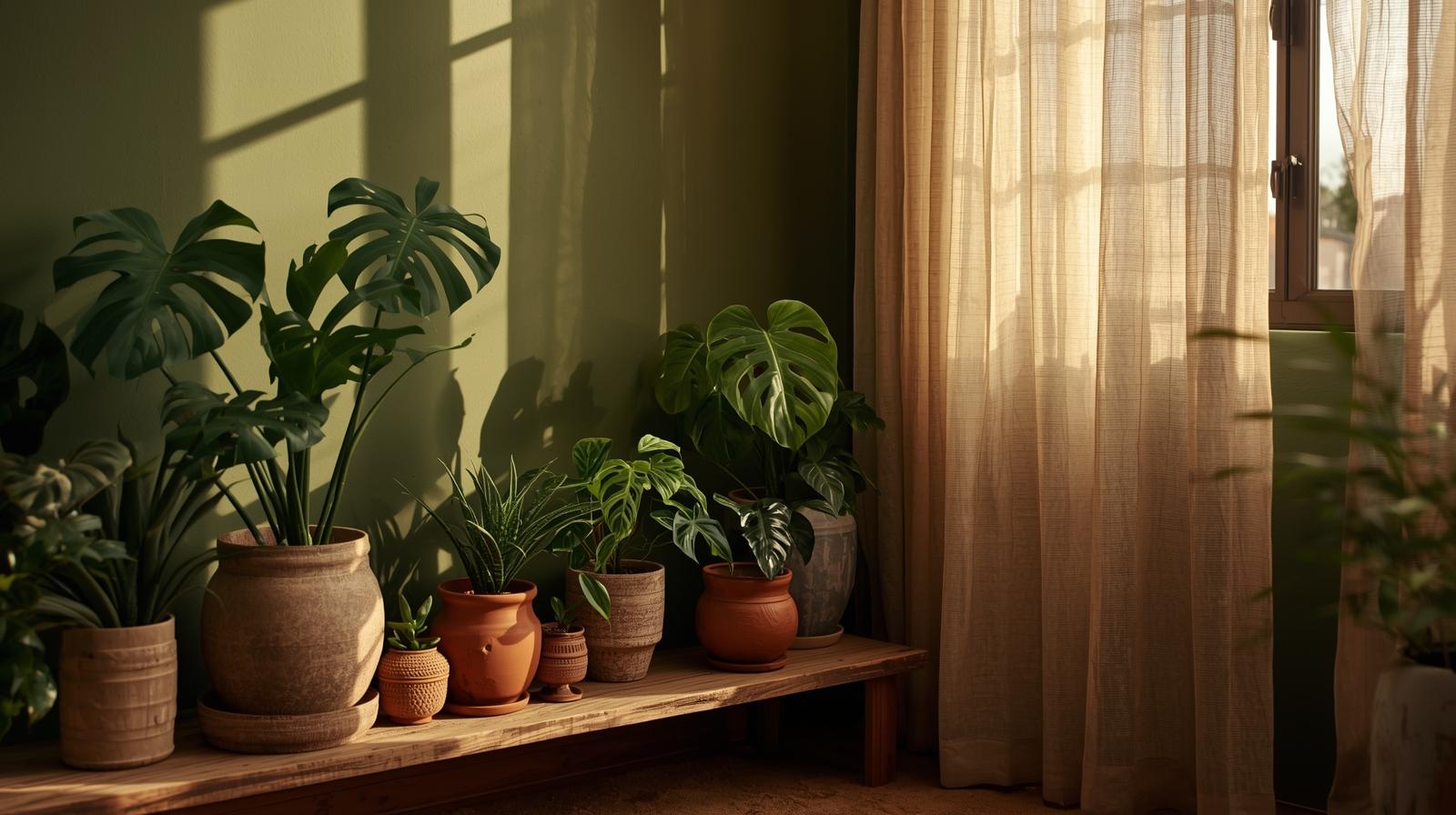
North light is cool, consistent, and kind. It doesn’t bleach fabrics or scorch leaves. It’s the ideal stage for understated greenery. Place a Snake Plant or Cast Iron Plant within two feet of the glass. Not on the sill—that’s too exposed—but just inside, where the light pools like shallow water on the floor.
Hallways are often afterthoughts. Dead zones. But a single Peace Lily on a narrow console—or a Pothos trailing from a high shelf—can transform passage into pause. In bathrooms, where moisture lingers and light is often artificial or minimal, these plants don’t just survive. They thrive. And they soften the clinical edge of tile and chrome.
Don’t tuck plants into crowded shelves. Let them occupy the edge. Or stand alone in a floor corner where two walls meet. Negative space isn’t emptiness—it’s framing. A ZZ plant in an empty corner doesn’t highlight the lack of furniture. It highlights itself. And by extension, your restraint.
“One plant, well placed, is worth ten scattered without thought.”
Overwatering kills more low-light plants than neglect. Their slowed metabolism means they use moisture slowly. Stick your finger two inches down. If it’s damp, wait. A weekly schedule is useless. Seasons change. Humidity shifts. Your plant isn’t a machine. Treat it like a guest who appreciates quiet attention, not rigid routines. (For a full guide on reading your plant’s needs, see our plant care essentials.)
Terracotta isn’t just aesthetic. It wicks away excess moisture, preventing root rot. Pair it with a well-draining mix—cactus soil with extra perlite works even for non-desert plants in low light. Avoid glazed ceramic unless you’re meticulous about drainage. And never use saucers filled with standing water. That’s not hydration. It’s suffocation.
Dust blocks what little light these plants receive. Wipe leaves monthly with a damp microfiber cloth. No leaf shine. No sprays. Just water and a soft touch. It takes three minutes. And it’s a small act of respect—for the plant, and for the clarity it brings to your space.
Grow lights? Harsh. Obtrusive. Out of step with a serene interior. Instead, place a mirror opposite your plant to bounce ambient light. Paint walls in warm whites or pale clay tones—they reflect without glare. Light oak floors or a pale wool rug can lift the whole tone of a room, giving your greenery just enough to work with. It’s physics, not technology.
Plants lean toward light sources, even weak ones. Every few weeks, give yours a quarter-turn. Not to “fix” it. To encourage symmetry. Do it while your kettle boils. Or as you leave the room. Make it part of your rhythm. This isn’t maintenance. It’s dialogue.
If you have a balcony that never sees direct sun—north-facing or deeply recessed—extend your indoor palette outside. A potted Cast Iron Plant or Snake Plant can summer outdoors, shielded under an awning or beside a wall. Use the same pot style to maintain continuity. For more on creating continuity between inside and out, explore our shaded balcony garden ideas.
Winter light is weaker, shorter, grayer. Move plants closer to windows. Reduce watering further. Accept that growth will slow. This isn’t failure. It’s alignment. Let your home echo the season’s quietude. Your plants already do.
Yes, they filter formaldehyde and benzene. Yes, studies link indoor plants to lower stress. But their real gift is subtler. It’s the way a single leaf catches the last light of day. The way you pause, just for a second, before turning on a lamp. They don’t demand interaction. They offer presence. And in a world of notifications and noise, that’s rare.
Buy one exceptional plant instead of five impulse purchases. Care for it. Watch it grow. Replace plastic pots with handmade ceramics. Let roots fill their space before considering another. This isn’t minimalism as deprivation. It’s curation as care. Your home isn’t a showroom. It’s a sanctuary. And every element—from the angle of light to the arc of a leaf—should serve that truth.