Newsletter Subscribe
Enter your email address below and subscribe to our newsletter
Enter your email address below and subscribe to our newsletter


Elevate Your Space, Everyday.
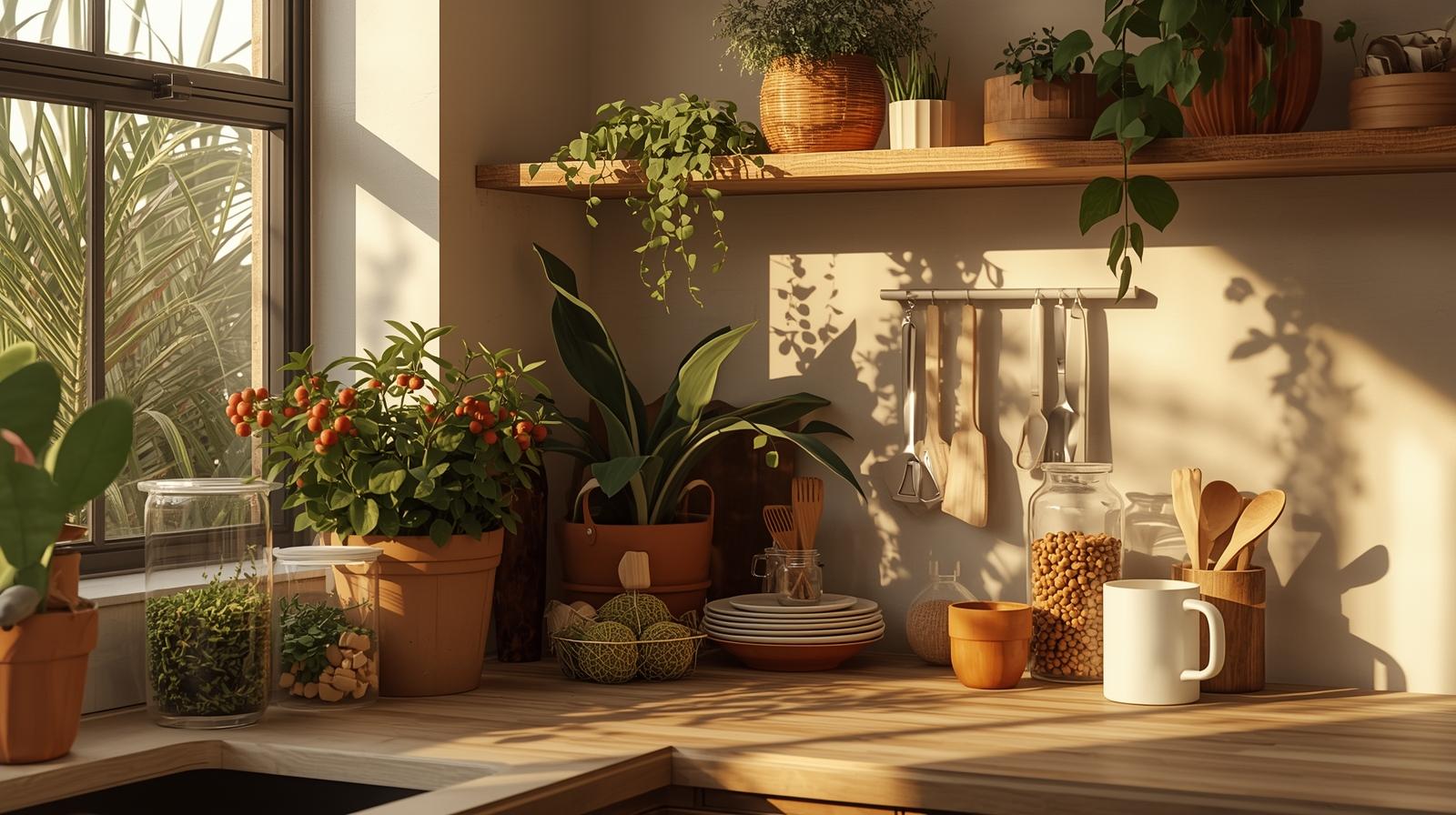
Reduce your eco-footprint with these 10 easy sustainable kitchen swaps. Ditch plastic and embrace reusable alternatives.
Most “sustainable kitchen” advice overwhelms you with expensive gadgets and all-or-nothing rules. But sustainability thrives in simplicity. The goal isn’t to overhaul your life overnight—it’s to integrate low-friction, high-impact swaps that align with how you actually live, cook, and store. These 10 changes blend function, form, and logic—so your kitchen feels calmer, cleaner, and consciously curated.
Beeswax wraps cling gently to bowls and wrap snugly around half an avocado or a block of cheese. They feel soft, slightly tacky, and carry a faint honeyed scent. Perfect for dry or room-temperature foods. I keep mine rolled in a drawer beside my cutting board—no rummaging required.
They’re breathable, which slows mold on produce like cucumbers or citrus. But they aren’t waterproof. Don’t use them for raw meat, wet leftovers, or anything dripping with sauce. The wax breaks down with moisture and heat, losing its grip and integrity.
Never put them in the fridge with soups or marinated dishes. For those, switch to glass containers with tight lids. Beeswax wraps excel at covering rising dough, wrapping bread ends, or sealing a bowl of chopped herbs—but not for liquids.
Wash in cool water with mild soap. Air dry flat. Every few months, refresh them by placing on parchment paper in a low oven (200°F) for 2–3 minutes—just enough to remelt the wax. One wrap can last 12–18 months with proper care.
These thin, cellulose-and-cotton cloths absorb 20 times their weight. When damp, they feel like a cross between a sponge and a soft rag. Dry, they’re stiff—but soften instantly under the tap. I keep three in rotation: one for spills, one for wiping counters, one for drying hands.
A single Swedish dishcloth replaces 17 rolls of paper towels. At $2 each, that’s $6 total versus $34+ spent on disposables. Plus, they’re compostable at end-of-life. No hidden plastic fibers. No landfill guilt.
Opt for oat, stone, or slate gray. They blend into clean surfaces without screaming “eco-project.” (I avoid bright prints—they feel like performance, not practicality.) Hang them over a faucet or drape them over a wooden peg rail to dry.
Toss them in the washing machine with your kitchen linens. Or microwave damp cloths for 60 seconds to kill bacteria. No bleach needed. They dry fast and rarely mildew if aired properly.
Plastic containers yellow, warp, and trap odors. Glass stays clear. Stainless stays cool. Both feel substantial in your hands—solid, not flimsy. And they don’t leach chemicals into your food, even when reheated.
Manufacturers replaced BPA with other bisphenols like BPS or BPF. Studies show these mimic estrogen just as aggressively. Heat, acidity, and time accelerate leaching. Your tomato soup shouldn’t come with a side of endocrine disruptors.
Pick one shape and material. Square glass containers nest neatly. Round stainless tins stack without wobbling. Uniformity reduces visual noise and makes shelf organization intuitive. This system pairs perfectly with our pantry organization guide—consistent shapes mean everything has a home, and nothing gets lost behind the lentils.
Vinegar cleaners leave that sharp, pickling odor that lingers for hours. Not pleasant when you’re prepping dinner. My alternative? Citrus peels steeped in vinegar for two weeks, then strained and diluted with water and a splash of castile soap. The result smells like a sunlit orchard—and cuts grease like a pro.
Fill a jar with citrus peels (orange, lemon, or grapefruit). Cover with white vinegar. Wait 14 days. Strain. Mix 1 part infused vinegar with 1 part water and 1 tsp castile soap. Pour into a glass spray bottle. Wipe counters, stovetops, even stainless steel.
Many “eco” labels are unregulated. Fragrances may still contain phthalates. Preservatives can irritate skin. If you prefer ready-made, our non-toxic cleaning products guide lists only brands with full ingredient transparency and third-party safety certifications.
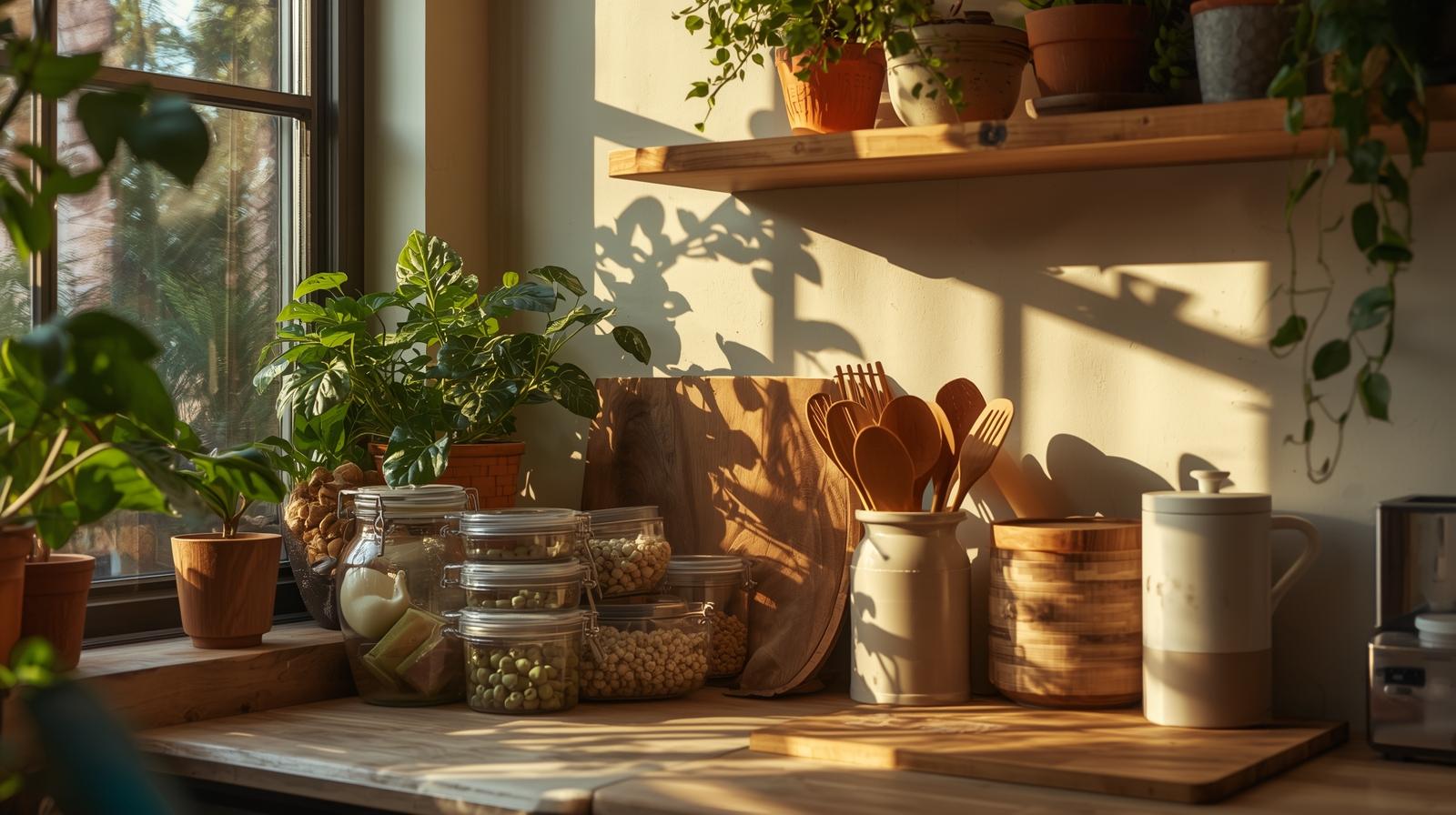
That soggy kitchen sponge? A bacterial breeding ground. Wooden brushes stay dry between uses. The bristles scrub without shredding. And they look like tools, not trash.
Wood’s natural tannins inhibit microbial growth. Unlike synthetic sponges, which trap moisture in crevices, wood dries quickly. Just rinse, shake off water, and stand upright.
Most quality brushes have detachable heads. When bristles wear down (after 3–6 months), swap just the head—not the whole handle. Less plastic. Less cost.
I use a short bamboo jar (4 inches tall) beside my sink. It catches drips and holds the brush vertical. The wood ages to a smooth, honey tone. Functional. Calm. Beautiful.
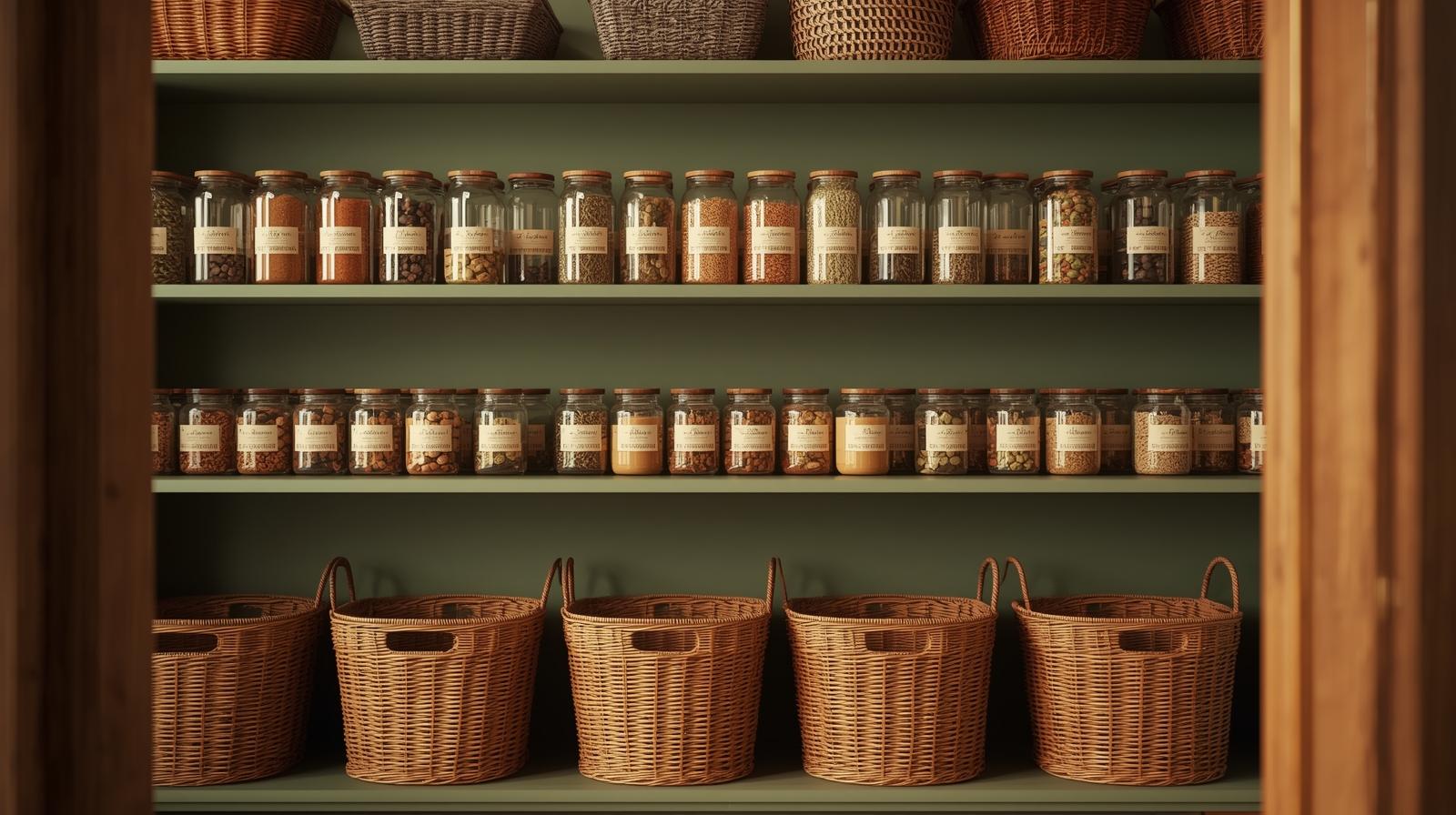
Bulk bins reduce packaging—but only if your system prevents waste. Too many people buy five pounds of quinoa, forget it exists, and toss it six months later. That’s not sustainability. That’s overconsumption with extra steps.
It’s visibility. If you can’t see what you have, you won’t use it. Transfer bulk goods into clear, labeled containers immediately. Opaque bins = forgotten food.
Use chalkboard labels or minimalist printed tags. Store newer items behind older ones. Practice “first in, first out.” Pair this with our food waste reduction strategies—like turning stale bread into crumbs or wilting greens into pesto—to stretch every ingredient further.
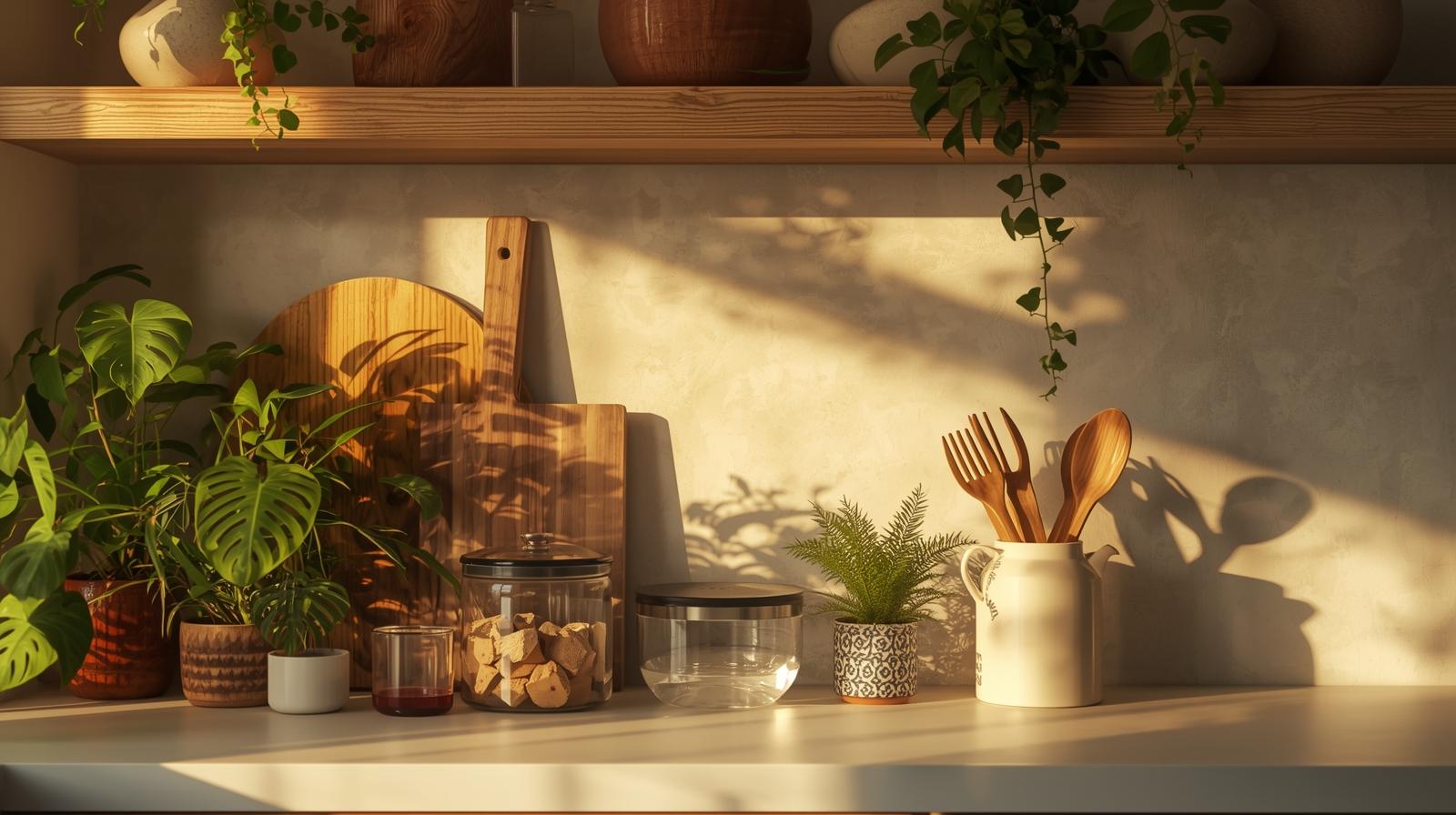
Yes, even for Tuesday night pasta. Cloth napkins don’t require special occasions. They just need a simple system.
I wash kitchen linens once a week—with towels or sheets. Four napkins add no extra water, energy, or time. In fact, they absorb better than paper and feel softer against your skin.
Keep them in a shallow top drawer near your dining area. Folded uniformly, they’re ready in seconds. I use undyed cotton in soft white—stains fade with sun-bleaching, and they match everything.
Non-stick, flexible, and reusable for years. My silicone mat has survived over 200 batches of cookies, roasted vegetables, and even caramel work. Nothing sticks. Nothing tears.
Unlike parchment (single-use) or foil (crinkly, wasteful), silicone mats lie flat and distribute heat evenly. They’re oven-safe to 480°F. No more worrying about burnt bottoms or sticking dough.
Let it cool. Wipe with a damp cloth. For sticky residue, a quick rinse under warm water is enough. Air dry. Store rolled or flat in a drawer. Done.
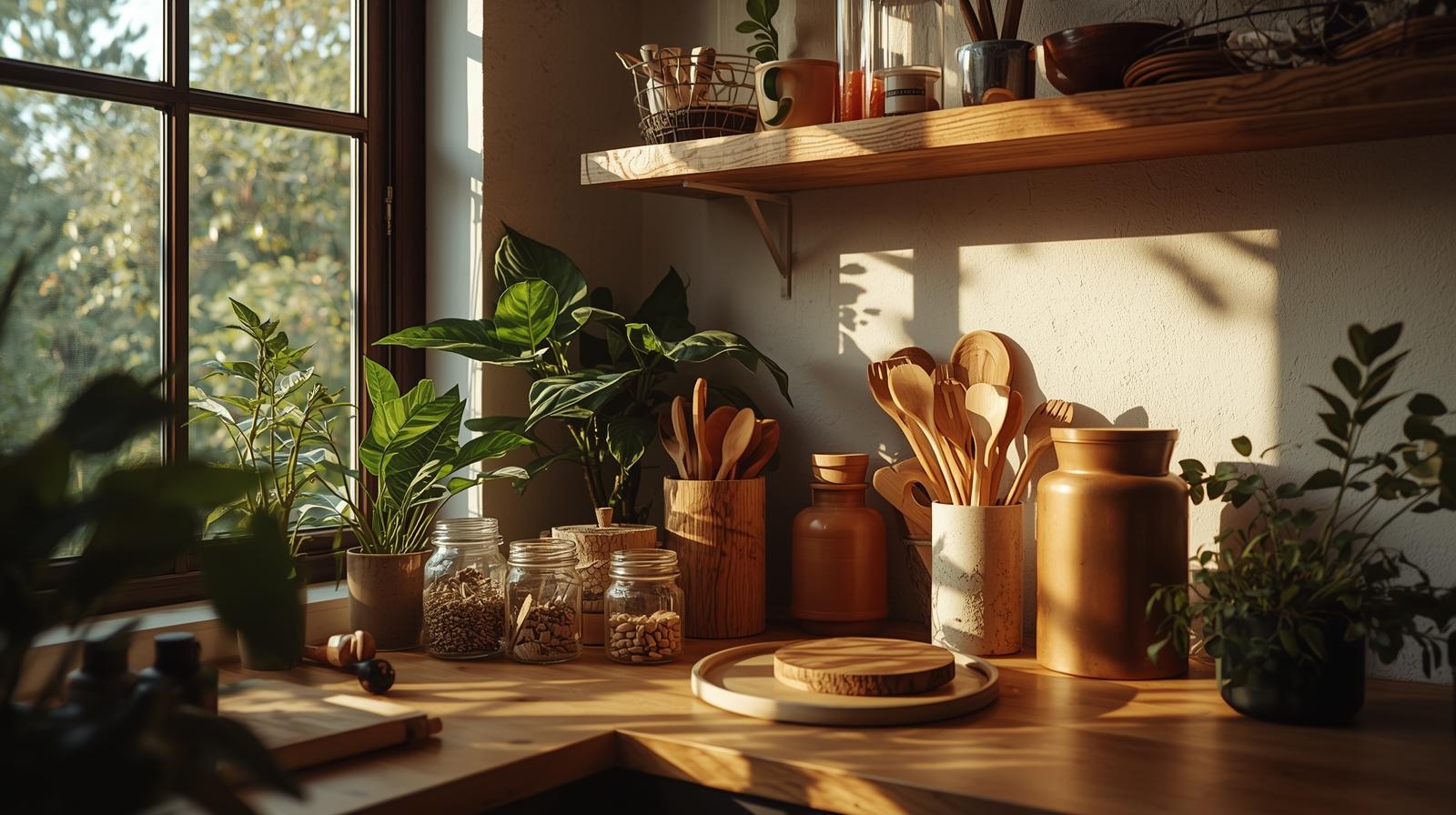
Plastic spatulas warp near hot pans. Wooden spoons don’t scratch cookware. Stainless steel tongs stay cool at the handle. These tools last decades—not months.
I once left a plastic spoon in a pot of simmering soup. It bent like taffy. Wooden or metal utensils won’t degrade, discolor, or leach microplastics into your food—even at high temps.
Running your hand over a smooth beechwood spoon or a polished stainless whisk feels intentional. These tools age gracefully. They develop patina, not cracks. They belong in a kitchen that values time, not trends.
No backyard? No problem. Modern countertop composters are sleek, odor-free, and designed for apartments.
Look for ceramic or stainless models with charcoal filters. Mine sits beside my coffee maker—same footprint as a sugar bowl. It holds a week’s worth of veggie peels, coffee grounds, and eggshells. No smell. No mess.
Many cities now offer curbside compost or drop-off hubs at farmers’ markets. Find your local program. Empty your composter weekly. For ideas on using scraps *before* they compost—like making broth from carrot tops or citrus peel powder—see our food waste reduction guide.
Sustainability sticks when it’s easy, logical, and visually harmonious. It’s not about buying more “eco” products. It’s about designing routines that align with your actual life.
Matching bamboo jars for spices, oils, and grains aren’t just pretty—they signal order. When everything looks like it belongs, you’re more likely to maintain it. (I repaint chipped labels. I realign jars every Sunday.) Beauty supports habit.
Start with the tools you touch daily: your dish brush, your food storage, your cleaning cloth. Master those. Then expand. One swap. One habit. No pressure. No perfection.
Sustainability isn’t about sacrifice; it’s about designing a kitchen that supports your values without demanding constant willpower.
Start with one swap. Let it become habit. Then choose the next.