Newsletter Subscribe
Enter your email address below and subscribe to our newsletter
Enter your email address below and subscribe to our newsletter


Elevate Your Space, Everyday.
 ByMaya Lin
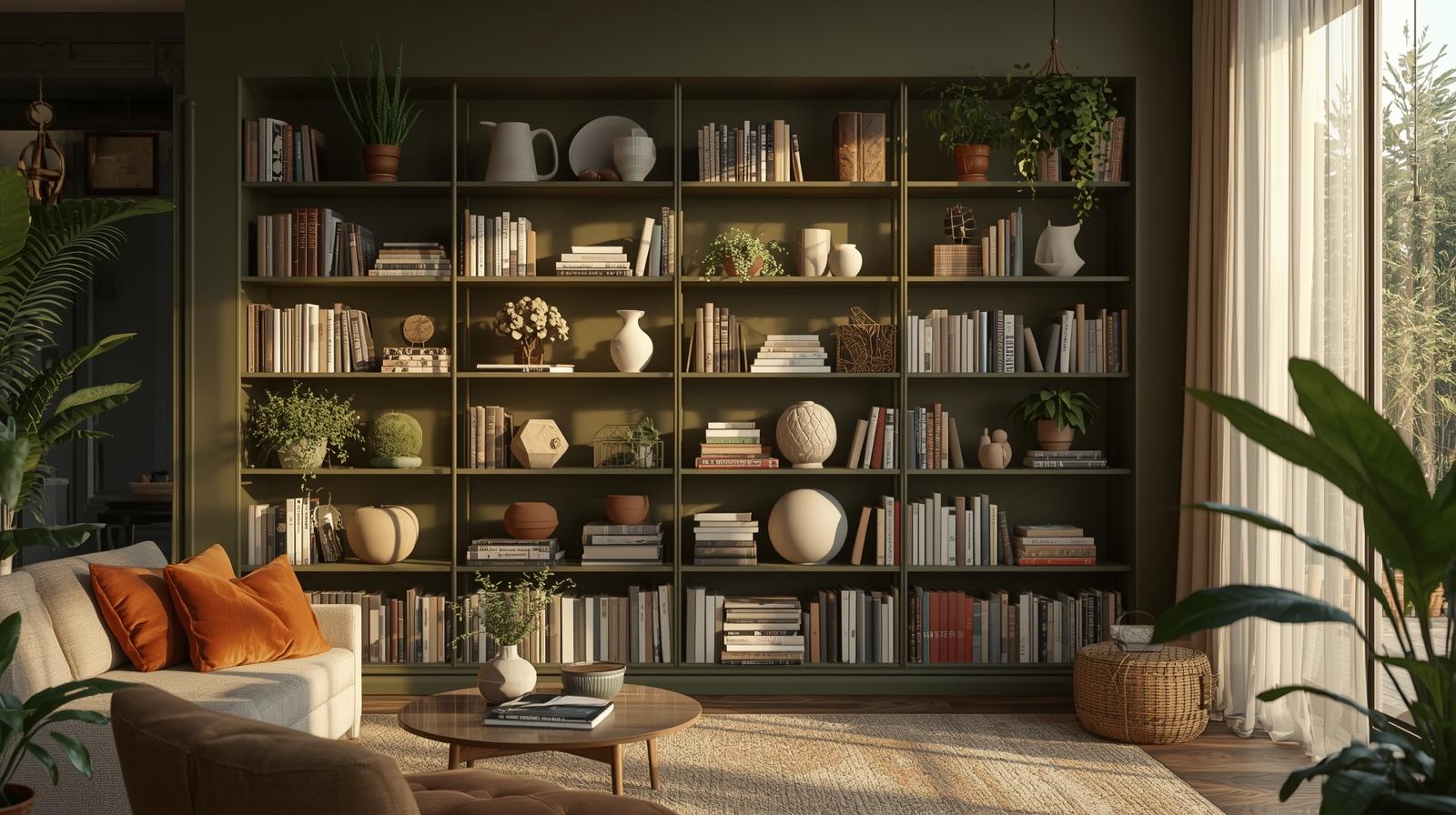
Turn your library into a focal point. The art of bookshelf styling, mixing books with art, plants, and personal treasures.
Here’s something most interior designers won’t admit: perfectly styled bookshelves—neatly color-coded, filled only with hardcovers, and void of personal clutter—are emotionally sterile. A bookshelf shouldn’t look like a catalog spread; it should feel lived-in, layered, and quietly personal. It’s not about hiding your life behind symmetrical stacks—it’s about letting your shelves breathe with the textures, memories, and objects that shape who you are.
“Organizing” implies control. “Styling” invites life. There’s a difference between tucking things away and placing them with care. When I approach a bookshelf, I don’t ask, “Where does this go?” I ask, “How does this feel next to that?”
Order for order’s sake creates silence. Styling with intention creates resonance. A shelf crammed with alphabetized paperbacks might satisfy a spreadsheet—but it won’t make you pause on your way to the kitchen. A shelf with a dog-eared novel leaning against a smooth river stone? That makes you stop. That makes you remember the beach walk last spring.
Clutter isn’t the enemy. Indifference is. A shelf with too much emptiness can feel like abandonment. One with too many things, all shouting at once, feels like noise. But a few well-chosen items—arranged not by size but by mood—create a quiet hum. Like the way a reading nook needs both a soft throw and a worn armchair, your bookshelf should feel like an extension of that comfort. (If you’ve built a reading nook nearby, let the shelf lean into it—same wood tones, same light, same breath.)
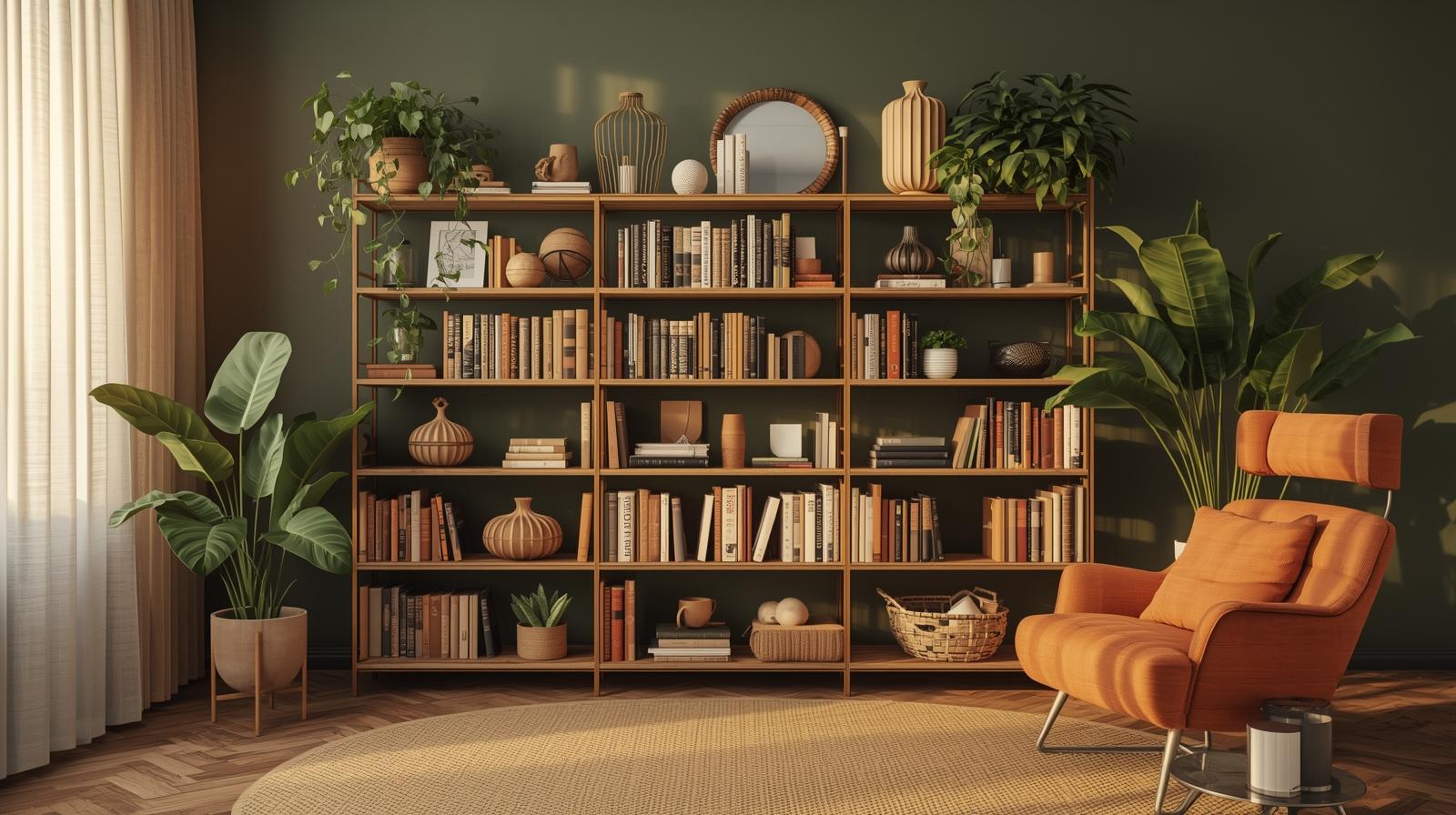
Books alone are flat. Even the richest jacket design lacks dimension without contrast. What your shelf needs isn’t more books—it’s more feeling.
Run your fingers along a paperback spine. Now touch a hand-thrown mug. The difference isn’t just visual—it’s tactile memory. Rough linen book covers next to a smooth agate slice. A coiled rattan box beside a stack of cookbooks. These pairings don’t just look interesting—they invite touch. And in a world of screens, that matters.
Cool glass catches the afternoon light differently than warm wood. A ceramic vase holds shadows in its curves; a folded wool scarf spills softness over the edge of a shelf. Together, they create a rhythm you feel before you see it. Try this: close your eyes and reach toward your shelf. What do your fingertips meet first? That’s your anchor.
Store receipts, spare chargers, or old letters in a linen-covered box. Place it beside a glazed bowl from a weekend market. No one needs to know what’s inside—only that it belongs. The fabric softens the line between private and public. The ceramic adds weight. Both say: this shelf is used, not just shown.
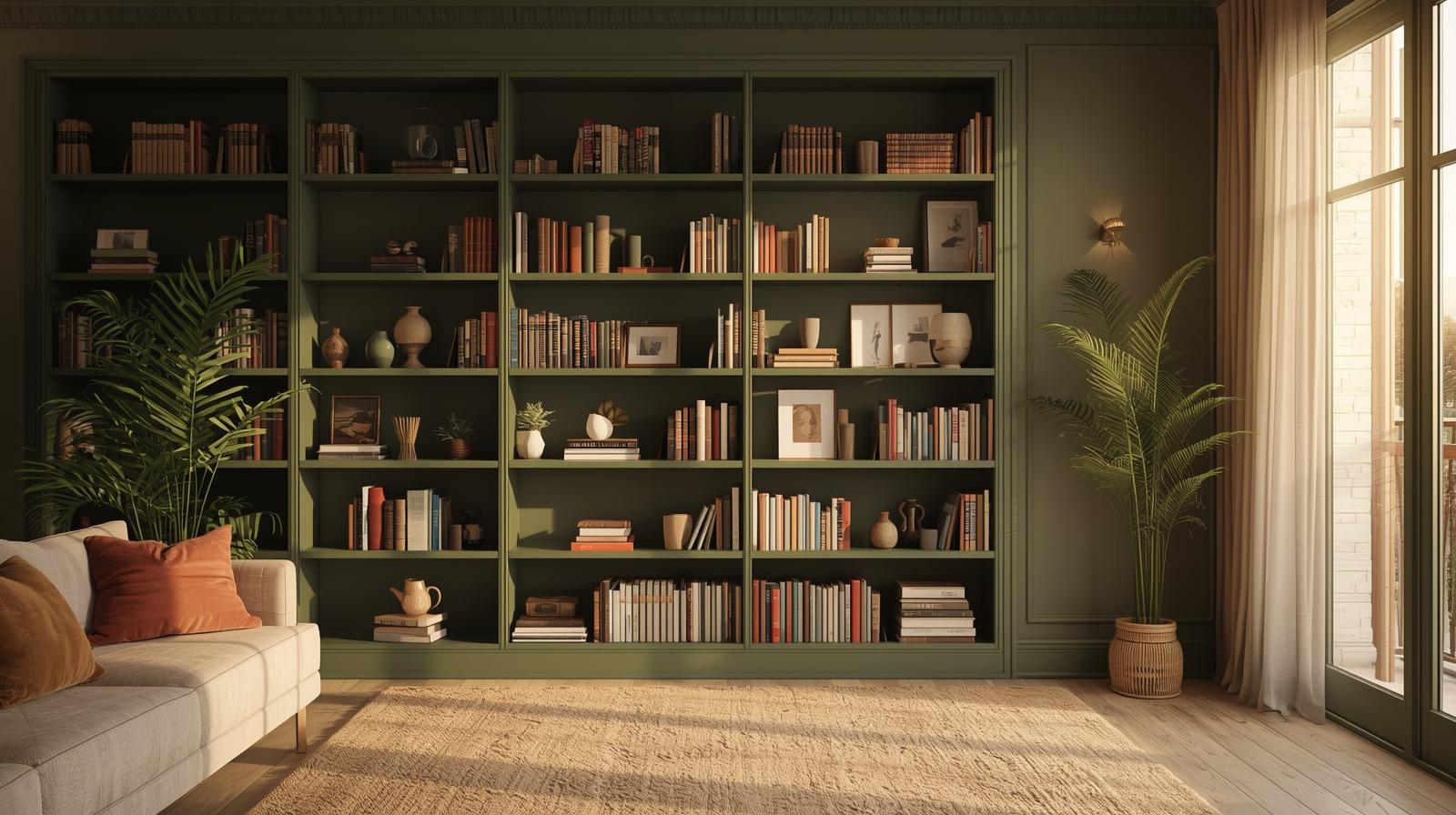
Symmetry feels like a rule. Asymmetry feels like a sigh.
Stack three books tall on the left. Leave the right bare except for a single pinecone. It’s not “unbalanced”—it’s honest. Life isn’t evenly distributed. Why should your shelves be?
A perfectly mirrored arrangement reads all at once and then vanishes from your mind. But an off-kilter lamp casting a diagonal shadow? A single dried flower leaning into empty space? Those make you lean in, too. You wonder why it’s placed just so. You imagine the moment it was set there.
In my own home, I keep a stack of poetry books tilted slightly—like they were just set down mid-reading. Next to them: a brass lamp with a frayed cord (I haven’t fixed it because the imperfection feels like history), and a bundle of lavender tied with twine, brittle now but still fragrant if you press your nose close. It’s not curated. It’s collected.
Groupings should whisper, not announce.
That postcard from Kyoto? Place it upright in a tiny wooden easel beside your grandmother’s teacup—the one with the hairline crack you’ve never glued. They don’t match. They don’t need to. Together, they say: I’ve been loved. I’ve wandered.
A chipped bowl from your first pottery class. A seashell with a hole worn through by time. A child’s painted rock labeled “DAD” in wobbly letters. These aren’t flaws—they’re fingerprints. When you display them without apology, you give others permission to be imperfect, too. (And if you’re thinking about how to display collections without chaos, remember: limit yourself to three “stories” per shelf. Any more, and the narrative gets lost.)
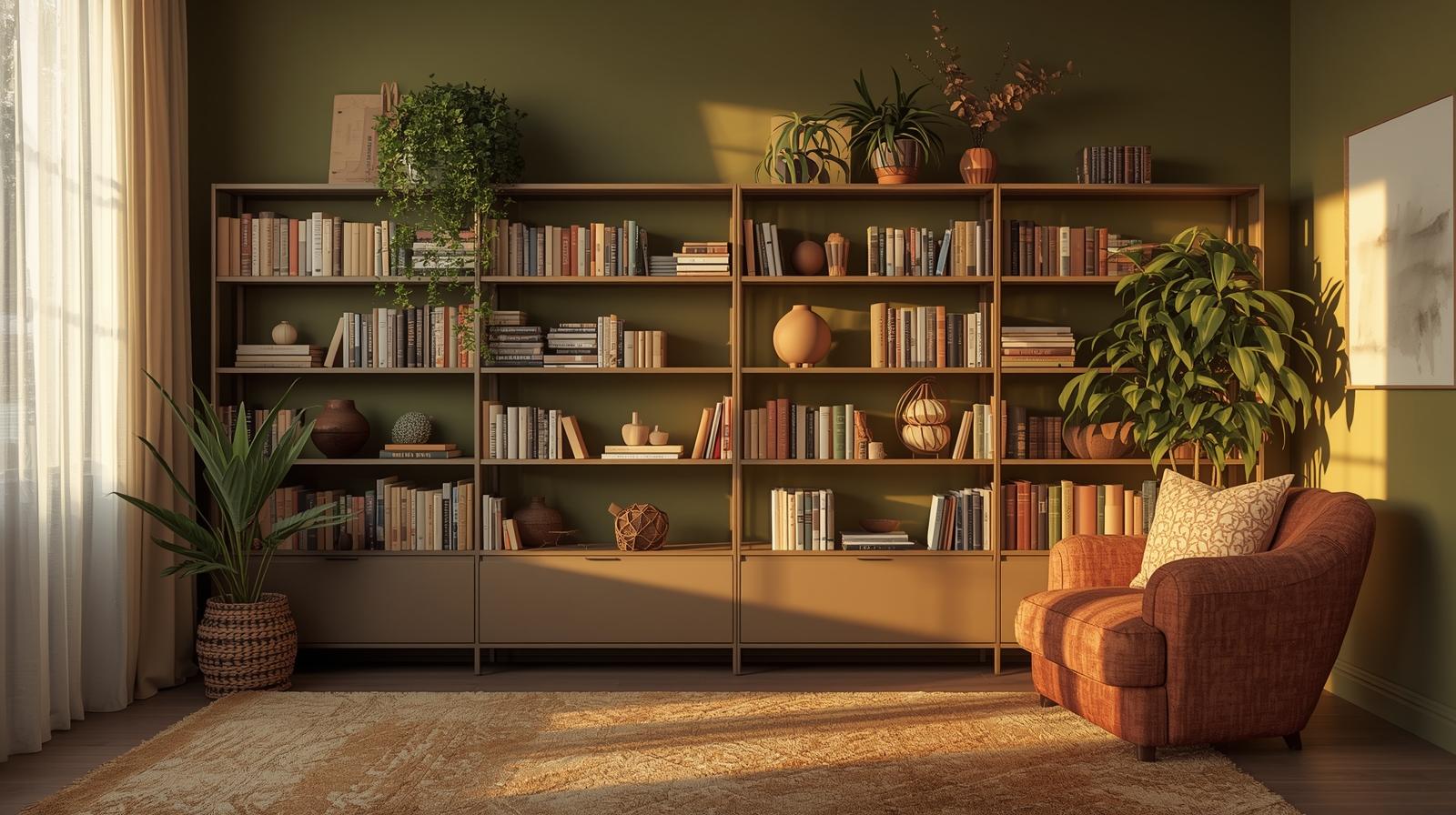
Empty isn’t empty. It’s breathing room.
Place a single smooth stone on a shelf. Now surround it with ten more. Which one do you notice? Space gives weight to what remains. It says: this matters enough to stand alone.
Morning sun hits an empty section of shelf. The grain of the wood glows. Dust motes float like tiny stars. For a moment, nothing is there—and yet everything is. That’s the power of absence. It’s not lack. It’s anticipation.
Editing is an act of care. Walk past your shelf. If your eyes scramble to land anywhere, remove one thing. Then another. Keep going until each object has room to be seen—and felt. Emotional clarity begins with physical space.
Leave room for the light to move. Leave room for your life to grow into it.
Walls aren’t the only place for art.
Tack a tiny sketch to the back of a shelf. Clip a faded photo with a miniature clothespin. These don’t need to be “important”—just meaningful. The shelf becomes a stage, and the back panel? That’s your backdrop.
Turn one frame sideways. Lean another flat against the back. Let books stand tall while a shallow tray lies open like a page. This isn’t disorder—it’s dimension. It turns a grid into a landscape.
(If you’ve ever played with gallery-wall layouts, you know the magic is in the gaps. Apply that same eye here—but with your hands. Touch the frames. Adjust until it feels right, not until it looks “done.”)
Your shelf shouldn’t be frozen in time.
In winter, tuck in a sprig of eucalyptus or a small pinecone. Come June, swap it for a sand dollar or a pressed magnolia bloom. These aren’t decorations—they’re markers. They say: I notice the turning of the year.
You don’t need new furniture. You don’t need to repaint. Just shift one thing. Move the ceramic bird from the top shelf to the middle. Let the empty space above echo for a while. Change isn’t always loud. Sometimes it’s a whisper on a shelf.
Set a monthly reminder: ten minutes with your bookshelf. Ask what still speaks to you. What feels tired? What’s been hiding in the back, waiting to be seen again? This isn’t maintenance. It’s conversation.
A shelf should age like skin—marked, softened, full of stories.
Tuck your toddler’s crayon drawing between Rilke and Mary Oliver. Nestle your new knitting needles beside old journals. These aren’t interruptions—they’re chapters. Your shelf isn’t a museum. It’s a diary with open pages.
Every object is a sentence. Every gap, a pause. The whole thing reads like a life: messy, tender, unfinished. And that’s the point. Perfection is lonely. A shelf that breathes with you—who you were, who you are, who you’re becoming—that’s where comfort lives.
True bookshelf styling isn’t about aesthetics alone. It’s about creating a tactile diary of your days, visible every time you walk by. Not to impress. But to remember: this is yours. This is you.