Newsletter Subscribe
Enter your email address below and subscribe to our newsletter
Enter your email address below and subscribe to our newsletter


Elevate Your Space, Everyday.
 ByMaya Lin
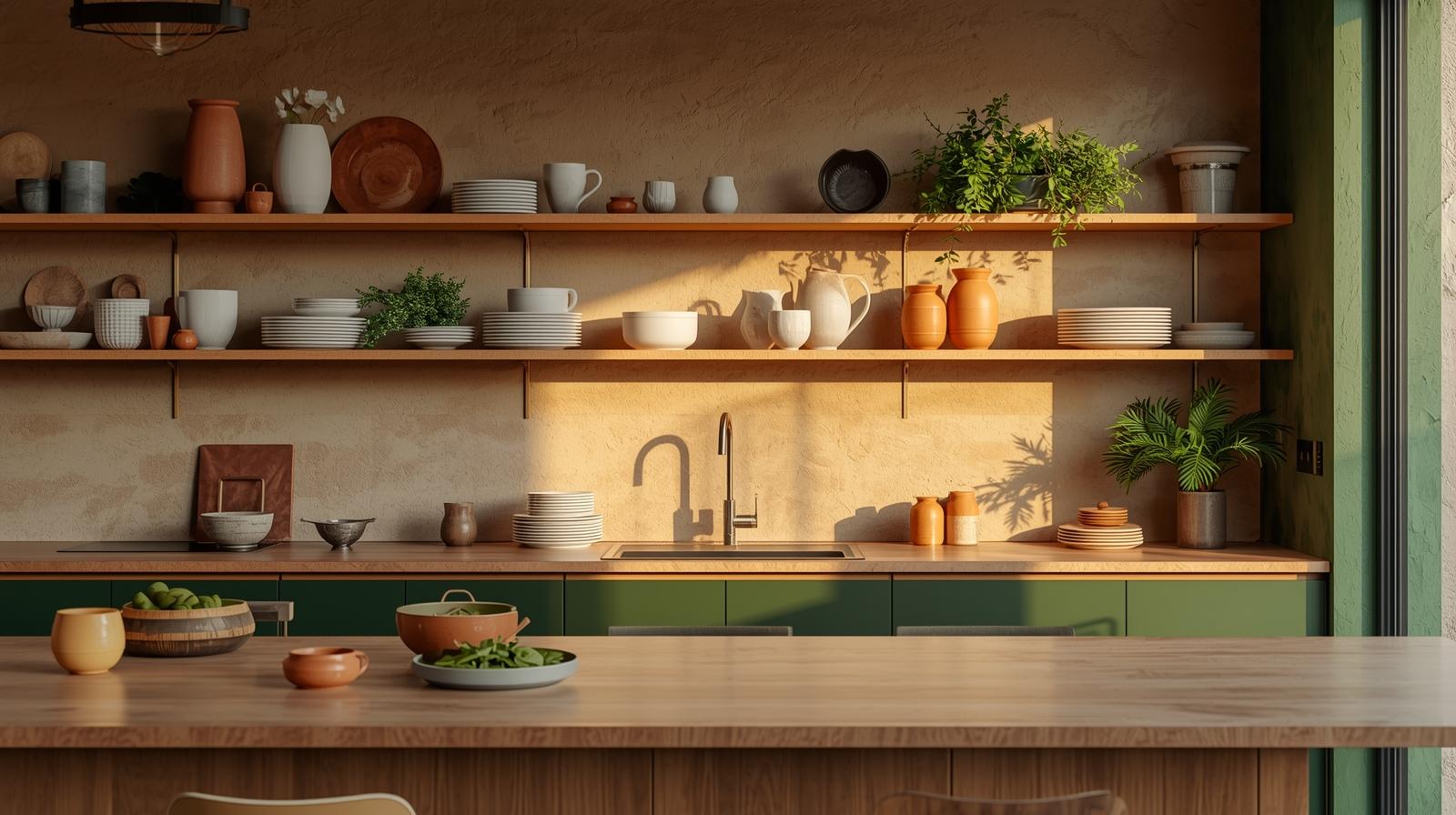
Love the look of open shelves? Here is our open shelving guide to balancing aesthetic styling with everyday functionality.
Open shelves should feel like a soft exhale—not a held breath. Yet so many of us swing between two extremes: shelves so pristine they might as well be behind glass, or ones so overstuffed they hum with low-grade anxiety. That tension between looking beautiful and actually being used? It’s real. And exhausting. But what if your shelves could hold both your favorite stoneware mug and your sense of calm? What if they reflected not just your taste, but your life—messy, nourishing, and alive?
There’s a heaviness that comes when every object on display must “earn its place” aesthetically. I’ve seen shelves where even the salt cellar wears a costume—too curated, too still. They look lovely in photos, yes. But try reaching for a bowl without disrupting the whole composition. Suddenly, using your own kitchen feels like trespassing.
Function isn’t the enemy of beauty—it’s its grounding wire. Start by asking: What do I touch most? My morning coffee cup. The wide pasta bowl. The olive oil I drizzle every night. These aren’t clutter. They’re anchors. Place them front and center. Let them be seen. Let them be used. Their daily presence adds a kind of quiet honesty that no staged vignette can replicate.
Perfection on open shelves is a quiet tyranny. It whispers: Don’t touch. Don’t spill. Don’t live. I once helped a client who kept her shelves immaculate—but never cooked. She microwaved meals in another room, terrified of disturbing the “look.” That’s not harmony. That’s performance. Your home should hold you, not judge you. A coffee ring on a ceramic plate? That’s not a flaw—it’s evidence of a life being lived.
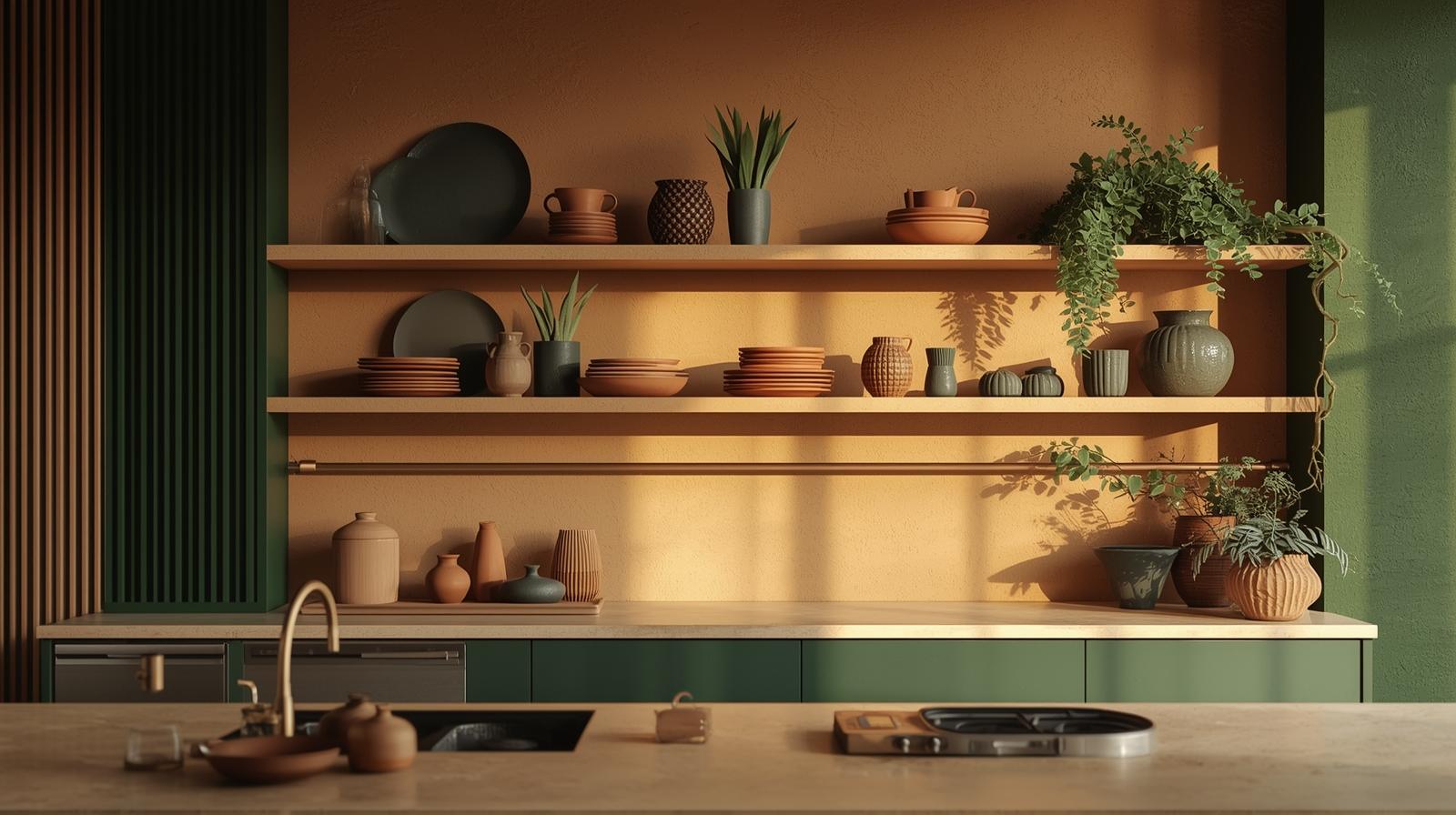
True curation isn’t about collecting pretty things. It’s about listening to how your space breathes. And that begins with texture—not color, not shape, but how something feels beneath your fingertips, or how light slides across its surface.
Run your hand along a raw oak shelf, then a matte-glazed ceramic jug, then a woven linen napkin folded nearby. Notice how each absorbs or reflects light differently. Rough. Smooth. Soft. These contrasts create depth without drama. A shelf lined only with white dishes might look clean, but it feels flat. Add a chunky terracotta pot, a smooth river stone, a linen-wrapped notebook—suddenly, the eye lingers. The hand wants to reach.
Think in thirds. Place a tall object—maybe a slender vase—at one end. In the middle, stack two plates leaning gently against a small wooden block. At the other end, leave space. Empty space isn’t wasted space—it’s breathing room. It lets your eye rest. It gives the arrangement rhythm. Also, pull some items slightly forward on the shelf, others back. This creates depth, like a shallow stage set. For arranging ceramics with both grace and function, see our guide on dishware display tips—it’s full of quiet tricks for making everyday pieces shine.
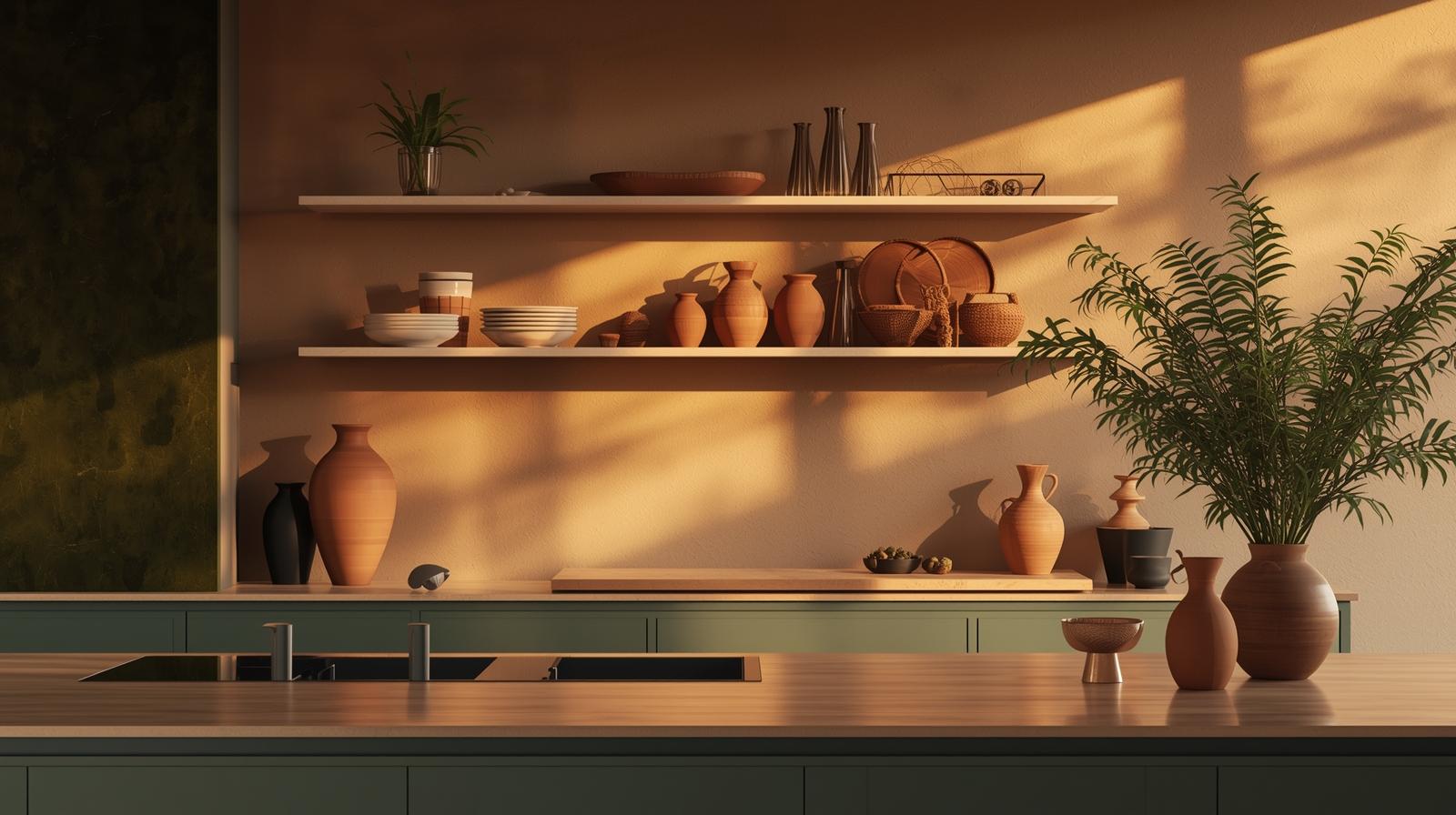
Your shelves should mirror your tempo. Not the tempo of a magazine spread, but yours—the one that pulses through your mornings, your late-night snacks, your weekend cooking marathons.
If your day begins with espresso in a tiny cup, keep that cup within arm’s reach—no climbing, no rearranging. If you brew tea at midnight, your favorite mug should live where your tired eyes can find it without fumbling. Shelves that serve your actual rhythms feel generous. Shelves built for someone else’s ideal day just gather dust.
In a home with kids, durability matters more than delicacy. Swap fragile glass for thick ceramic or enamelware. Keep everyday bowls on lower shelves so small hands can help themselves (and yes, sometimes drop things—that’s okay). If you live alone, maybe you want a shelf just for the books you’re currently reading, paired with the candle you light each evening. Your shelves should reflect who’s living there—not who you think should be.
Before you place a single object, consider the bones: depth, spacing, material. These choices shape everything that follows.
Twelve inches deep might look spacious, but it swallows plates into the back wall. Nine inches is often enough for standard dinnerware—and keeps everything visible. Vertical spacing? Leave at least 12 inches between shelves if you’re storing mugs or jars. Less than that, and you’ll knock over your honey jar reaching for a glass. In tight kitchens, vertical space is gold. See our small kitchen organization guide for clever ways to maximize height without crowding.
Pick materials that soften with time. Walnut darkens like old paper. Steel develops a faint sheen from daily contact. Even painted shelves, if done in milk paint or clay-based finishes, will wear with character, not grime. Avoid high-gloss laminates—they show every fingerprint, every water spot, like accusations. Your shelves should wear your life lightly, not resist it.
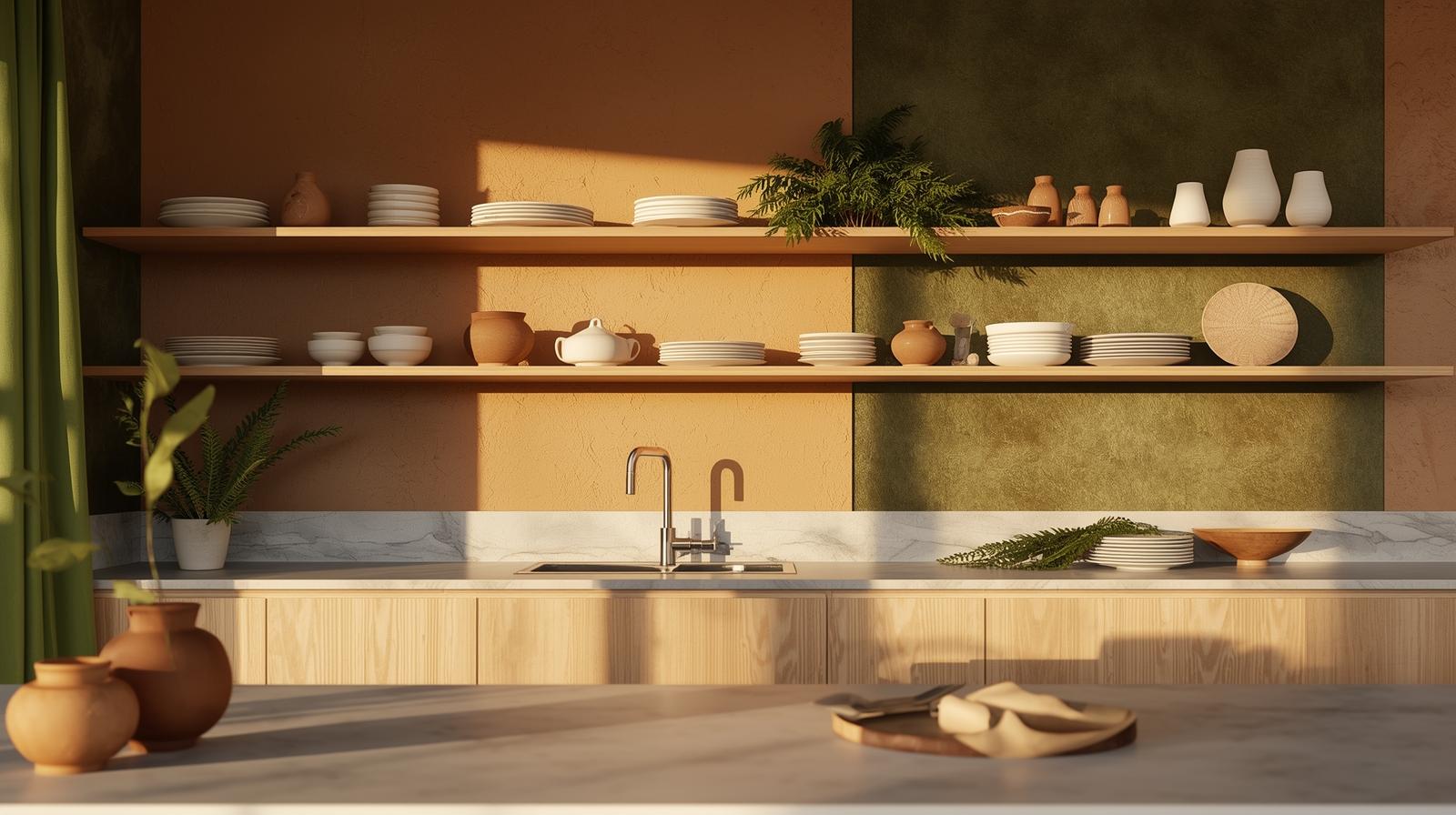
Less isn’t about emptiness. It’s about making room for what matters.
On any given shelf, limit yourself to three “hero” objects—plus functional items you use daily.
Three ceramic pitchers. One stack of bowls. A small plant. That’s plenty. The eye finds peace in restraint. And you’ll notice each object more—the curve of a handle, the glaze pooling at the base. Abundance isn’t about quantity. It’s about presence.
Store a few extra pieces in a cupboard—seasonal mugs, a special serving platter. Swap them in slowly. A sprig of eucalyptus in winter. A handful of dried lavender in summer. This keeps your shelves feeling fresh without adding permanent clutter. Change becomes a ritual, not a chore.
Your counter and your shelves should talk to each other—not compete.
Keep only what you use daily on the counter: your kettle, your knife block, maybe your fruit bowl. Everything else—spice jars, extra mugs, backup glassware—lives above. The shelf becomes an extension of your workflow, not a storage afterthought. For more on clearing your counters without losing function, try our kitchen counter declutter guide.
Imagine moving from stove to sink to shelf. Your path should feel open, unobstructed. If you have to dodge stacks of plates or weave around a leaning tower of cookbooks, the energy stalls. Leave one shelf partially empty. Or group items in loose clusters with space between. Air moves. Light moves. You move.
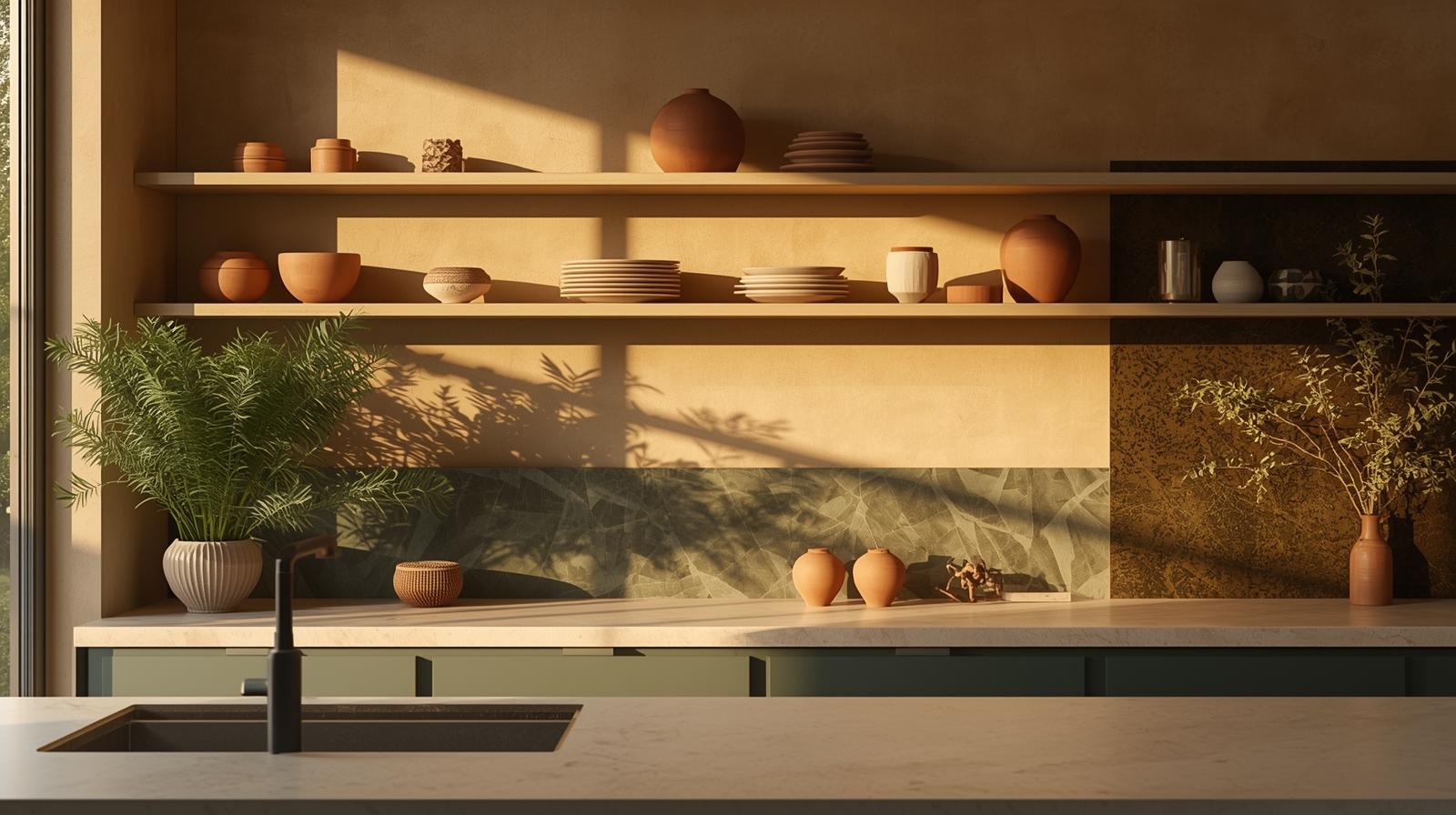
Real harmony isn’t symmetrical. It’s balanced in a way only life can create.
Stack plates off-center. Let a mug sit alone on the far right. Place a small cutting board leaning against a bowl. These small irregularities say: a person lives here. Not a stylist. Not a robot. You. And that’s beautiful.
No rule matters more than your comfort. If your grandmother’s mismatched teacups bring you joy, display them—even if they “clash.” If you love stacking cookbooks sideways because it’s easier to grab one, do it. Your shelves should serve your heart as much as your hands.
You don’t need a weekend. Just ten minutes, and a little attention.
Take everything off one shelf. Hold each item. Does it spark warmth? Do you use it weekly? If not, thank it, and tuck it away. Be kind—but honest. This isn’t purging. It’s making space for what truly belongs.
Once you’ve placed things back, step away. Take a photo with your phone. Look at it on screen—it flattens the scene, revealing clutter you didn’t notice. Adjust one thing. Then stand back. Breathe. Does the shelf feel calm? Inviting? Like it’s holding space for you, not demanding performance? Good. That’s the balance we’re after. Not perfection. Presence.